


Shopping Cart
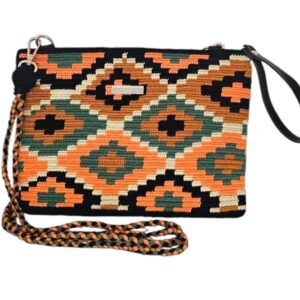
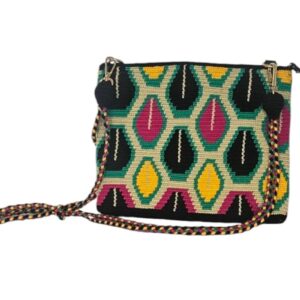
The Wayuu tribe is the largest surviving indigenous community in Colombia, representing 20% of Colombia’s indigenuos population. They are known as the people of sun, sand and wind. The Wayuu are the original makers of the Wayuu “Mochila” Bags as well as the designers of these breathtaking brightly colored bags. These people and their ancestors have been knitting and crocheting for centuries. The technique was born from the adaptation of traditional European crochet.
The next step is the scraping of the nepa. The objective is to leave the nepas smooth and ready to dry in the sun for 4 days. The nepas are gathered in bundles of 12 and left to dry in the sun until they turn white. Once drying is complete, the nepas are “ripped” (cut vertically) to achieve a width of approximately 1 cm. To dye the nepas of Caña Flecha, masos (heavy hammers) are used to soften and flatten them. These bunches are then cooked with natural products and clay. Depending on the color you want to obtain, different elements are mixed such as water, lemon juice, wild cane and apple tree leaves. Once the nepas are cooked, they are left submerged in mud for 3 consecutive days, and then washed. Finally, the dyed nepas are braided to obtain strips of cloth that end up being sewn to make bags and hats.
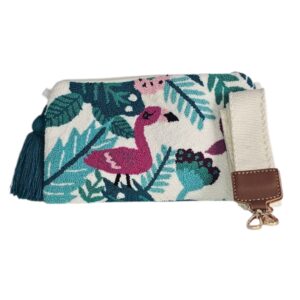
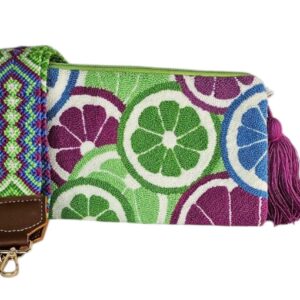
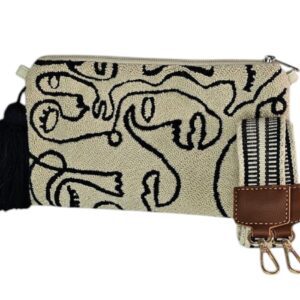
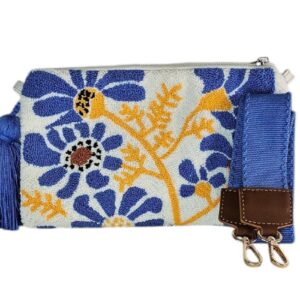
The punch needle is another technique used by the Wayuu artisans to make bags and accesories.
Punch needle is a form of needlework closely related to rug hooking. To do punch needle, the artisan uses a hollow needle tool to “punch” loops of wool yarn through holes in a woven foundation cloth to create a design. The series of loops (aka the pile) gives the design a rug-like appearance.
Punch needle goes by a few names, including needle punching, punch needle embroidery, and punch needle rug hooking.